Five Critical Competencies Reshaping Our Industry—And How Your Network Can Help You Get There First
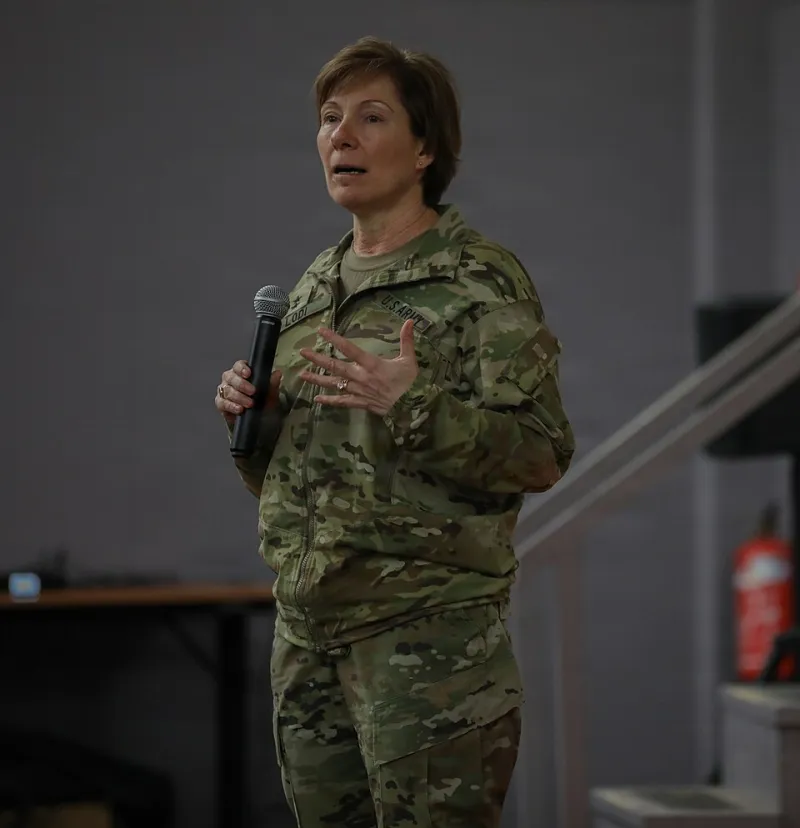
Photo: U.S. Army photo by Pvt. Robert Palmer Jr, Public domain, via Wikimedia Commons
The Skills Gap Is Already Here—Most Organizations Just Haven't Noticed Yet
Every industry moves through cycles of disruption and adaptation. What separates organizations that lead from those that scramble to catch up is rarely talent or resources alone—it is the speed with which leadership identifies emerging competency requirements and acts on them with intention. In our field, that window of proactive opportunity is narrowing.
The five competencies outlined below are not speculative. They are already appearing in job descriptions, RFPs, and strategic planning documents across the sector. What remains rare, however, is the organizational infrastructure to develop these skills systematically—or the professional community resources to support individuals who want to build them independently. That is precisely where OPDG Professional Network can serve as a meaningful accelerant.
1. Data Fluency Beyond Basic Analytics
The conversation about data literacy in professional settings has been ongoing for nearly a decade. But the nature of the competency has evolved substantially. Today, data fluency is no longer about understanding dashboards or reading a quarterly report. It encompasses the ability to critically evaluate data sources, identify methodological limitations, communicate quantitative findings to non-technical stakeholders, and integrate data-informed thinking into operational decision-making at every level.
Many organizations have invested in analytics tools without investing equally in the human capacity to use them well. The result is sophisticated software operated by professionals who lack the conceptual framework to extract its full value.
How your network can help: OPDG Professional Network hosts peer learning cohorts and technical workshop series specifically designed to bridge the gap between tool adoption and genuine fluency. Members can also connect with data practitioners in adjacent specializations through our working group structure—a low-stakes environment for building competency alongside peers facing identical challenges.
2. Cross-Functional Collaboration at Scale
Organizational structures are flattening. Project teams are increasingly composed of professionals from disparate functional backgrounds who must integrate their expertise quickly and effectively. The ability to collaborate across silos—communicating in shared language, managing competing priorities diplomatically, and synthesizing diverse inputs into coherent outcomes—has become a differentiating professional skill rather than a baseline expectation.
Yet most professional development programs still train people within their functional lanes. The result is a workforce that is highly capable within its specialization and underprepared for the cross-functional realities of modern project environments.
This competency is also closely tied to leadership readiness. Professionals who demonstrate fluency in cross-functional collaboration consistently move into expanded roles more quickly than technically superior peers who struggle outside their immediate domain.
How your network can help: OPDG's interdisciplinary committee structure is specifically designed to place members in collaborative settings alongside peers from different functional backgrounds. Participating in a multi-disciplinary working group—particularly one tackling a real industry challenge—offers the kind of applied cross-functional experience that classroom training cannot replicate. Volunteering for a joint task force is one of the most underutilized development opportunities available through your membership.
3. Regulatory and Compliance Agility
The regulatory environment governing our industry is not static, and the pace of change shows no signs of slowing. New federal guidance, state-level legislative activity, and evolving compliance expectations are creating a landscape in which professionals who rely on static knowledge bases are perpetually behind. What is needed is not just awareness of current regulations, but the capacity to monitor, interpret, and adapt to regulatory change as it unfolds.
This is a competency that demands both technical grounding and strategic thinking. Professionals must understand not just what the rules say, but how to assess organizational exposure, communicate risk to leadership, and design adaptive processes that remain compliant under evolving conditions.
How your network can help: OPDG Professional Network maintains a dedicated regulatory affairs committee that tracks and analyzes developments in real time. Members gain access to curated compliance updates, expert commentary, and direct dialogue with practitioners who have navigated recent regulatory transitions firsthand. For professionals who want to build genuine agility in this area, active participation in this committee—rather than passive receipt of its outputs—offers substantial development value.
4. Strategic Communication and Thought Leadership Development
The ability to articulate complex ideas clearly, persuasively, and appropriately for varied audiences has always mattered in professional settings. But the current environment has raised the stakes considerably. Organizations increasingly expect senior contributors to represent their expertise externally—through published content, conference presentations, panel participation, and media engagement. Professionals who cannot do so effectively are at a structural disadvantage when it comes to advancement and organizational visibility.
Perhaps more importantly, thought leadership has become a mechanism for organizational credibility in competitive markets. Firms whose professionals are visible contributors to industry discourse carry a reputational advantage that compounds over time.
Despite this reality, very few professionals receive formal development support in strategic communication. Many have valuable perspectives and deep expertise but lack the frameworks to translate that knowledge into content that resonates externally.
How your network can help: OPDG Professional Network's publishing platform—including our member-contributed articles, conference presentation tracks, and podcast series—provides a structured environment for developing and exercising this competency. Members who contribute content receive editorial guidance and audience exposure simultaneously. Beginning with a short contributed piece or a panel discussion is a low-risk entry point into thought leadership practice that many members underutilize.
5. Change Leadership and Organizational Resilience
Disruptive change is no longer an occasional organizational challenge—it is a persistent operating condition. The professionals and organizations that navigate it most effectively are those that have developed deliberate competency in change leadership: the capacity to guide teams through uncertainty, maintain operational continuity during transitions, and build organizational cultures that treat adaptation as a core capability rather than an emergency response.
This is a competency that cuts across functional roles and organizational levels. It is not exclusively the domain of HR or executive leadership. Increasingly, organizations need professionals at every level who can steady their teams, communicate change constructively, and model the adaptive behaviors they are asking others to adopt.
How your network can help: OPDG Professional Network's mentoring program connects members with experienced practitioners who have led organizations through significant transitions. Case-based peer learning sessions—available both regionally and virtually—offer members the opportunity to analyze real change management scenarios alongside colleagues who bring diverse organizational contexts. The value of learning from peers who have navigated analogous challenges in real time is difficult to overstate.
The Competitive Advantage of Acting Early
Competency development is not a one-time event. It is a sustained process that requires access to the right resources, relationships, and learning environments at the right time. The organizations and professionals who begin building these five capabilities now—before they become universal expectations—will enter the next phase of industry evolution with a meaningful structural advantage.
Your OPDG Professional Network membership provides access to the peer expertise, curated resources, and applied learning opportunities needed to pursue each of these competencies with intention. The infrastructure exists. The question is whether you are ready to use it.
Reach out to your regional chapter coordinator or visit the member resources portal to identify the programs and working groups most aligned with your development priorities. The professionals who are building these capabilities today are the ones who will be defining best practices tomorrow.