The Specialist Trap: How Deep Expertise Can Quietly Limit Your Career Ceiling
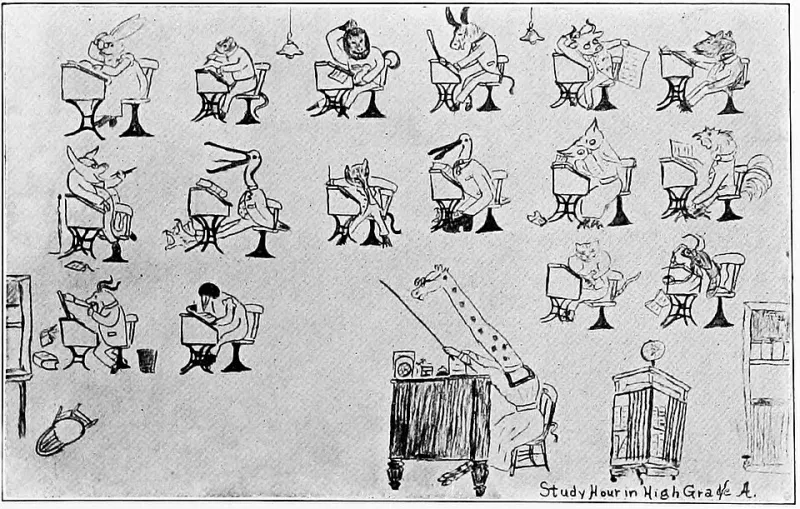
Photo: Martin W. Barr, Public domain, via Wikimedia Commons
There is a peculiar irony embedded in the career trajectories of many high-performing professionals: the deeper their expertise grows, the more confined their opportunities can become. Across industries, specialists invest years—sometimes decades—refining a narrow but genuinely valuable skill set, only to find that the market rewards breadth in ways it rarely rewards depth alone. Call it the specialist trap. It is not a failure of competence. It is, more precisely, a failure of positioning.
At OPDG Professional Network, we have observed this pattern repeatedly among members who arrive at pivotal career moments asking the same fundamental question: Why aren't my accomplishments translating into the advancement I've earned? The answer, more often than not, lies not in what they know but in how they are communicating what they know—and to whom.
The Hidden Cost of Going Deep
Specialization creates genuine market value. Organizations need people who can solve complex, domain-specific problems that generalists simply cannot address. That demand is real, and it is not going away. However, specialization also introduces a structural constraint that most professionals do not recognize until they are already experiencing its consequences.
When your professional identity is anchored exclusively to a technical function or a narrow subject matter, decision-makers—whether they are hiring managers, clients, or executive sponsors—tend to route only a specific category of opportunities in your direction. The high-stakes leadership roles, the cross-functional project assignments, the advisory engagements that carry premium compensation: these tend to flow toward professionals who are perceived as capable of operating across multiple contexts, not just within one.
The result is what might be described as an expertise tax. Specialists often earn well within their defined lane but leave meaningful compensation and advancement on the table because they have not translated their knowledge into a broader value narrative. They are, in effect, charging for one dimension of a multi-dimensional asset.
What Industry Leaders Did Differently
Consider the trajectory of professionals who have successfully navigated this constraint. A recurring pattern emerges: they did not abandon their specialization. They reframed it.
One senior technical director at a mid-sized manufacturing firm spent the first twelve years of her career as a recognized authority in process engineering. Her reputation within that function was unassailable. Yet when she sought a path toward operations leadership, she encountered consistent resistance. The feedback, though rarely stated directly, was clear: decision-makers did not see her as an enterprise thinker.
Her response was deliberate. She began contributing to cross-departmental initiatives that connected her process expertise to financial outcomes and customer experience metrics. She sought speaking opportunities at industry conferences—not to present technical papers, but to translate her work into business language that resonated with non-specialist audiences. Within three years, she had reframed her professional brand from process engineer to operational strategist with deep technical grounding. The distinction sounds subtle. The career outcomes were not.
This reframing strategy appears consistently among professionals who manage to maintain specialist credibility while expanding their opportunity footprint. They invest in the translation layer—the ability to connect technical knowledge to strategic, financial, or organizational outcomes that matter to a broader audience.
Packaging Your Expertise for a Wider Market
The practical challenge is one of communication architecture. Most specialists are highly fluent in the language of their domain and considerably less practiced in the language of adjacent stakeholders. Closing that gap requires intentional effort across several dimensions.
Develop a cross-functional vocabulary. Identify the two or three business outcomes that your expertise most directly influences—revenue, risk, efficiency, customer satisfaction—and build the habit of leading with those outcomes rather than with process or methodology. Your technical depth remains the proof point; the outcome is the headline.
Pursue visibility beyond your function. Active participation in professional organizations like OPDG provides precisely the kind of cross-sector exposure that builds a broader professional brand. Presenting at industry events, contributing to working groups outside your immediate specialty, and publishing thought leadership pieces all serve to establish you as a thinker with range, not merely a technician with depth.
Reframe your credentials in context. When describing past accomplishments—whether on a resume, a professional profile, or in conversation—anchor your specialized contributions to organizational or market-level impact. The engineer who reduced process variance by 18 percent tells a narrower story than the professional who reduced operational costs by $2.4 million through targeted process redesign. The underlying work is identical. The perceived value is not.
Build deliberate relationships outside your domain. One of the most consistent findings among professionals who successfully broaden their career trajectory is that they cultivated relationships with leaders in adjacent functions before they needed those relationships. These connections serve both as advocates and as informal intelligence sources about where broader opportunities are emerging.
Maintaining Credibility While Expanding Your Brand
A reasonable concern among specialists contemplating this kind of repositioning is the risk of appearing to overreach—of claiming expertise they do not possess and undermining the credibility they have worked hard to establish. This concern is legitimate, and it deserves a direct response.
Broadening your professional brand does not require claiming expertise you lack. It requires demonstrating that your existing expertise is relevant in contexts beyond the ones where it has historically been applied. There is a meaningful difference between I am a generalist and I am a specialist who understands how my work connects to the broader enterprise. The former may dilute your credibility. The latter almost invariably enhances it.
The professionals who navigate this transition most successfully are those who remain genuinely anchored in their core competency while actively developing the contextual awareness and communication skills that allow them to present that competency in a wider frame. They do not pretend to know things they do not know. They simply ensure that the things they do know are understood in their full organizational and strategic significance.
The Strategic Imperative
The market for specialized expertise is not declining. If anything, the complexity of modern organizations creates an enduring demand for professionals with genuine depth. But the professionals who will extract the highest value from that demand—in compensation, in career mobility, and in professional influence—will be those who pair their depth with the ability to communicate its breadth of application.
The specialist trap is not inevitable. It is a positioning problem, and positioning problems have positioning solutions. For members of the OPDG Professional Network, the resources, relationships, and visibility opportunities available through active engagement represent precisely the kind of platform that supports this kind of strategic reframing.
The expertise you have built is genuinely valuable. The question worth asking is whether you are presenting it in a way that captures that full value—or whether you are quietly leaving some of it on the table.